Drywall repair in Los Angeles
Filling a hole goes quickly. Making it disappear takes the texture and the paint, and that's the work we price.
From 7am to 7pm, you get the part's name and the price inside two hours.
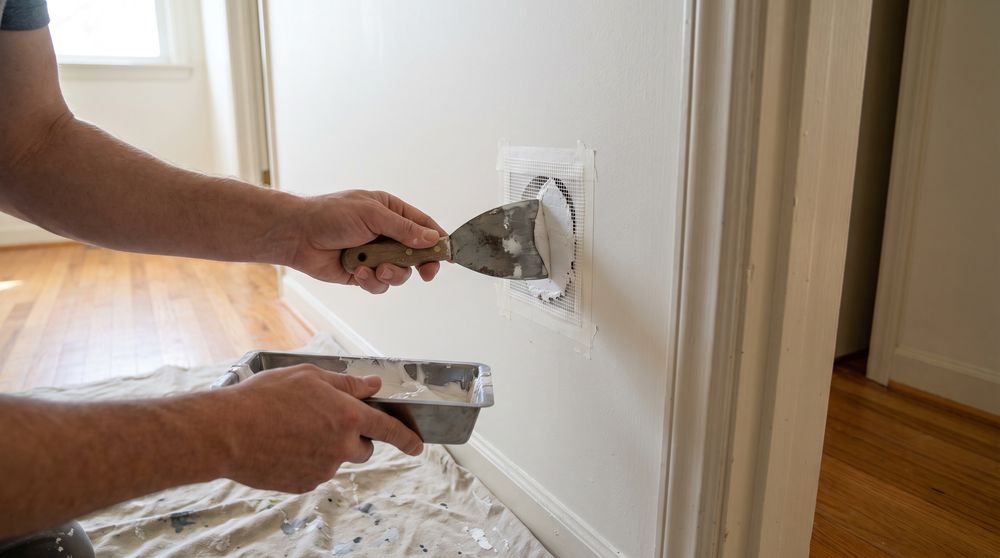 The patch
- Free estimate, in writingYou see the number before we book
- One-year workmanship warrantyIf it fails, we come back free
- The part comes with usAt what it cost, receipt attached
- Open 7am to 7pm, every dayWeekends included
Holes we patch.
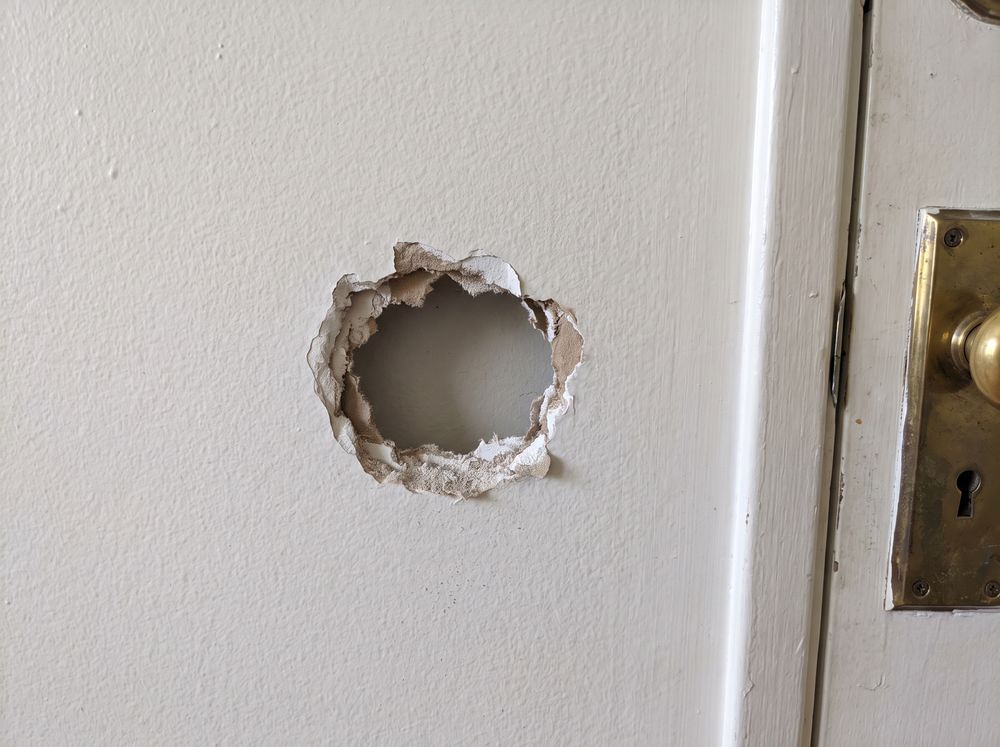
- The doorknob hole behind a door with no stop.
- Bolt and anchor holes from an old TV mount or a shelf.
- A square cut out where someone opened the wall to get at a pipe or a wire.
- A dented outside corner, or one with the metal edge showing.
- Tape lifting along a seam.
- A crack in plaster that keeps coming back.
The patch, then the part people see.
A small hole gets a mesh patch and compound. A bigger one gets a piece of new drywall cut to fit, screwed to a backer inside the wall, then taped.
The texture is what gives a patch away. Orange peel and knockdown are the common ones in Los Angeles, and older rooms are often smooth or hand-troweled. We match it on the wall around the patch before any paint goes on.
Fresh compound drinks paint differently from an old wall, so the patch gets primed first or it dries to a dull square. If you have the can, or the name of the color, tell us. If the old paint has faded, the fix that doesn't show can be the whole wall, corner to corner, and you hear that before we book.
In a plaster wall, compound alone tends to crack again, so the patch is built up to the depth of the wall around it. Not sure what your walls are? We find out before we start.
How a patch goes.
- You tell us the size and the room. If a photo helps, we ask for one when we call you back.
- We name the patch and price it. In writing, with the texture and the paint on the quote.
- The floor gets covered. Drop cloth down before anything is cut or sanded.
- Patch and compound, then texture. Each coat dries before the next goes on.
- Primer, then paint. We look at it with light coming across the wall from the side, which is where a patch shows.
Compound has to dry between coats. On a big patch that means a second visit or a long day, and we say which up front. It's written on the quote too.
What a patch costs.
- Its size. A nail hole and a doorknob hole are different repairs.
- The texture to match. A smooth wall is often the hardest one to hide a patch on.
- The paint. A can you already have, or a color we match. A faded wall may need a full coat.
- Drying time. A second coat means a second visit or a long day.
Several patches in one visit cost less each than the same patches across several visits. Labor is one number for the job, in writing, and it changes only if you say yes to a change.
Asked about drywall.
Will I see the patch?
The aim is that you won't, in the light the room usually gets. Before we leave, we check it in low light from the side, because that's where a patch shows.
The hole is from a leak. Can you patch it?
Once the leak is fixed and the wall has dried. A wet wall can't be closed up. Fixing a leak inside the wall is a plumber's job, and we say so first.
Can you patch where my TV mount was?
Yes. The bolt and anchor holes get filled and textured, then painted out.
What if the patch cracks?
Fails within a year? Tell us what's broken. The return visit is ours.
The hole in the drywall
Patched and textured to match, then painted out. A second coat has to dry, so we say up front if that means a second visit.
We name the part and bring it with us.
Call, or show us what's broken in the form. Any day between 7am and 7pm, the part's name and the price come back inside two hours.